
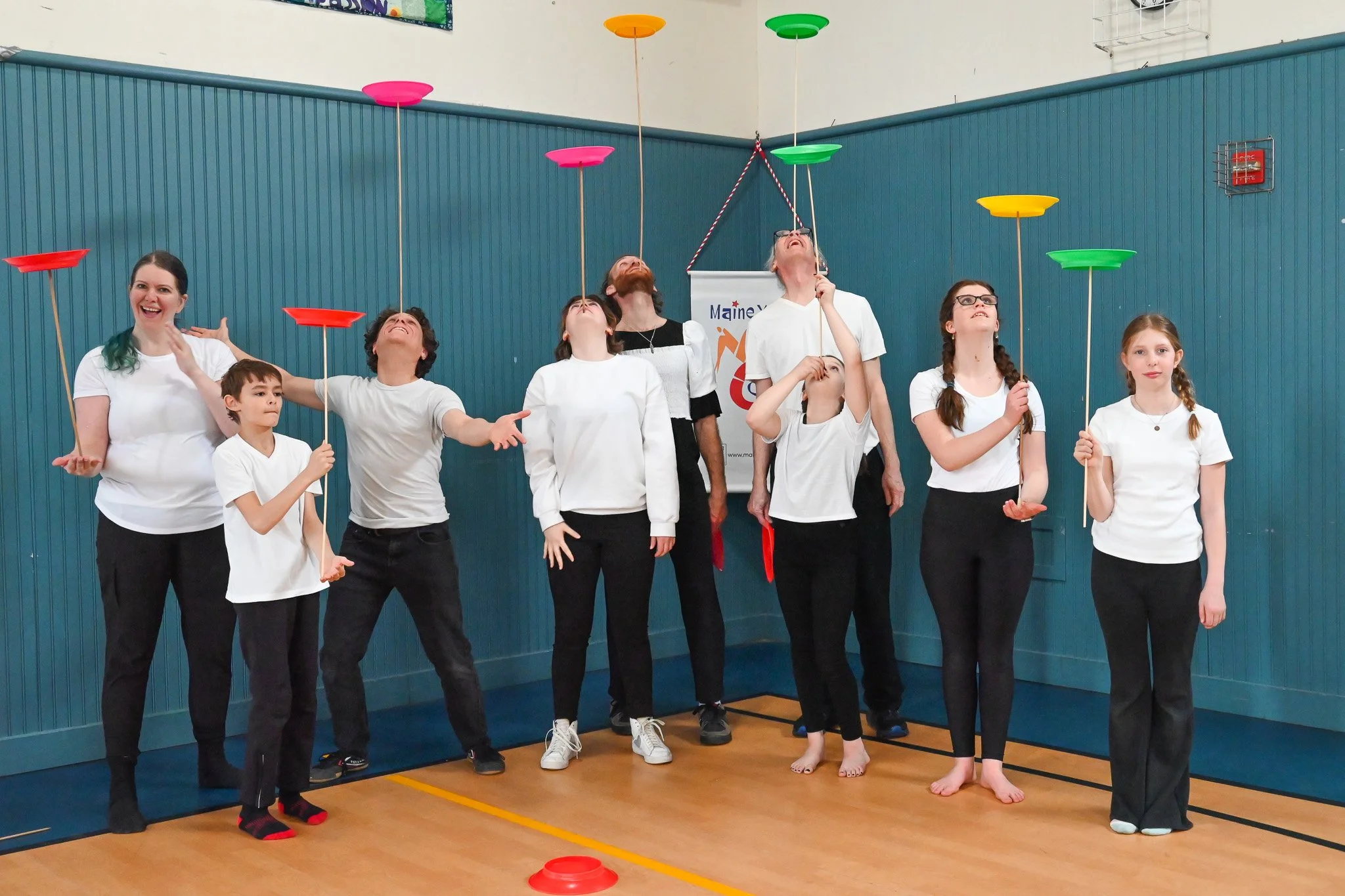
I still remember the first time I felt truly at home in a circus space.
It started with an invitation from a friend. “Come take this clown class with me. It’ll be fun.” At the time, I thought of myself as a theater kid. I loved movement and performing, and I had already dabbled in juggling and magic, but I had never taken a circus class. I expected the class to feel familiar. I assumed there would be lines to learn, choreography to memorize, and a finished piece someone else had already planned.
It started with an invitation from a friend. “Come take this clown class with me. It’ll be fun.” At the time, I thought of myself as a theater kid. I loved movement and performing, and I had already dabbled in juggling and magic, but I had never taken a circus class. I expected the class to feel familiar. I assumed there would be lines to learn, choreography to memorize, and a finished piece someone else had already planned.
Instead, I walked into something completely different.
There were no scripts waiting for us. No single right way to move. What I found was an environment built on curiosity and play. We were encouraged to explore, to experiment, and to pay attention to what made us laugh and what felt honest in our bodies. That class introduced me to a new way of creating. And coincidentally, it also introduced me to the person who would become my clown mentor and very dear friend.
For the first time, I was not there to perform someone else’s vision. I was there to discover my own movement style, my own clown.
What surprised me most was the sense of collaboration. Everyone in the room was contributing ideas, supporting one another, and building something together. It felt less like a class and more like a group of people sharing a common goal of imagination and discovery.
That experience changed the way I thought about being a performing artist. I stopped seeing performance as something you present to an audience and started seeing it as something you build in relationship with others.
I quickly signed up for every class that was offered, and dove into this new style of performing arts. I even came close to dropping out of college to pursue this new passion. That’s right, I almost literally “ran away to join the circus”. Luckily, I had a moment of divine clarity (Thanks mom and dad) and decided to finish getting my degree. At which point, I promptly ran away to join the circus. Turns out, it isn’t going anywhere.
I had found my people. Yes, we learned skills, tricks, and techniques. But more importantly, we were learning how to try, how to fail, and how to keep going.
Now, as a professional circus artist working with young people, I see those same lessons play out every day.
Why I Teach Circus to Youth
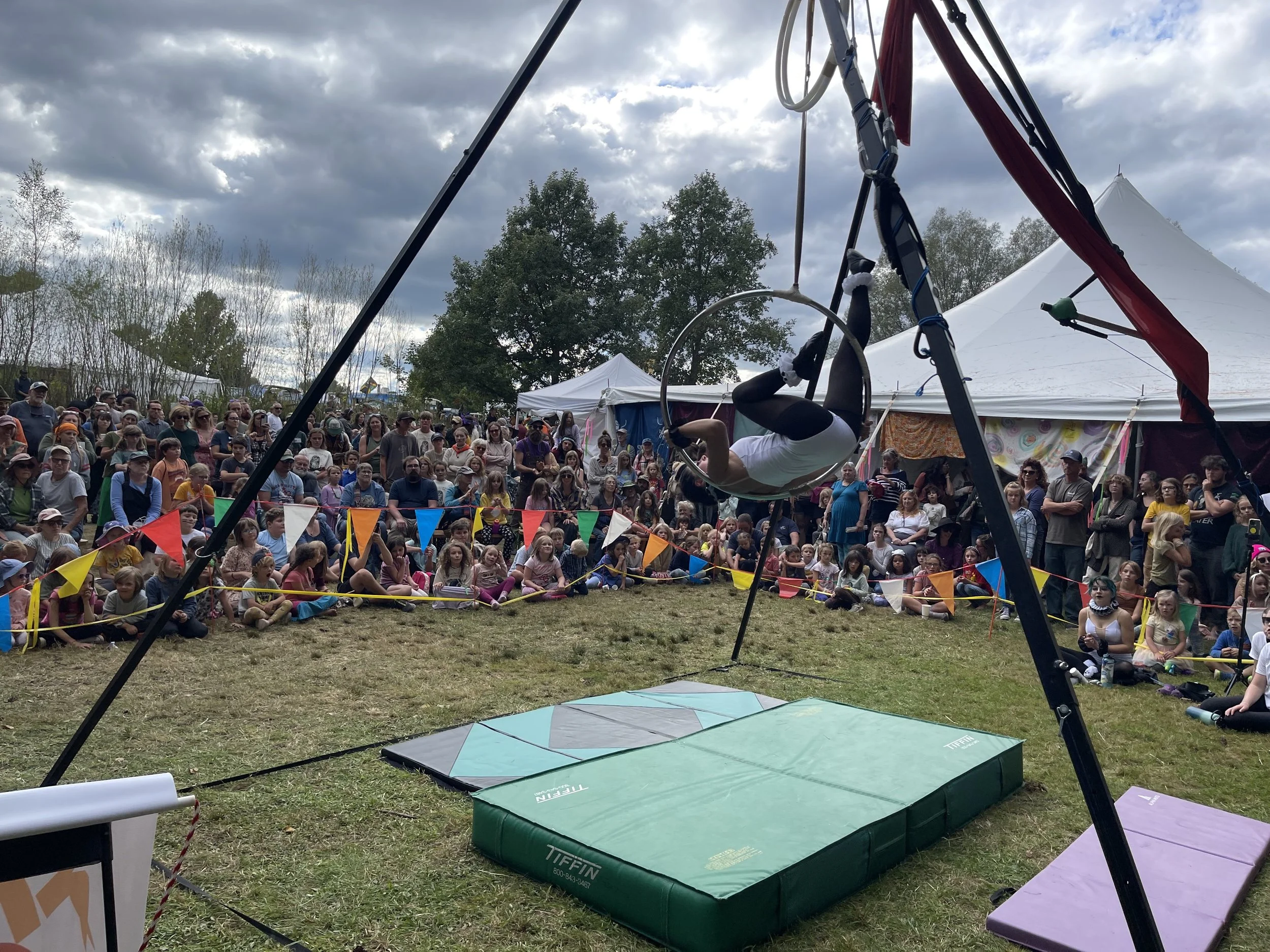
Circus offers young people a way to express themselves and feel proud.
I do not teach circus just to create performers. I teach circus to help young people build confidence they can carry into the rest of their lives.
My goal is for every student to leave feeling a little stronger than when they arrived. Stronger in their body. Stronger in their sense of self. Stronger in their ability to work with others.
Circus is not a cure for everything. But it is a powerful tool. It gives kids a place to move, to try, to fail safely, and to succeed in ways they may not have experienced before.
What the Research Is Telling Us
A recent research review looked at circus programs from all over the world that were designed to support children and teens. These programs showed up in schools, after-school programs, community spaces, and therapeutic settings. Some worked with general youth populations, and others focused on young people facing challenges like disability, trauma, mental health struggles, or social isolation.
Researchers examined 42 different circus programs, which is a lot of juggling clubs to keep track of. What they found was surprisingly consistent. As the authors put it, “improvements in physical and/or social-emotional outcomes were reported for all studies.” In plain language, every program helped kids in at least one meaningful way.
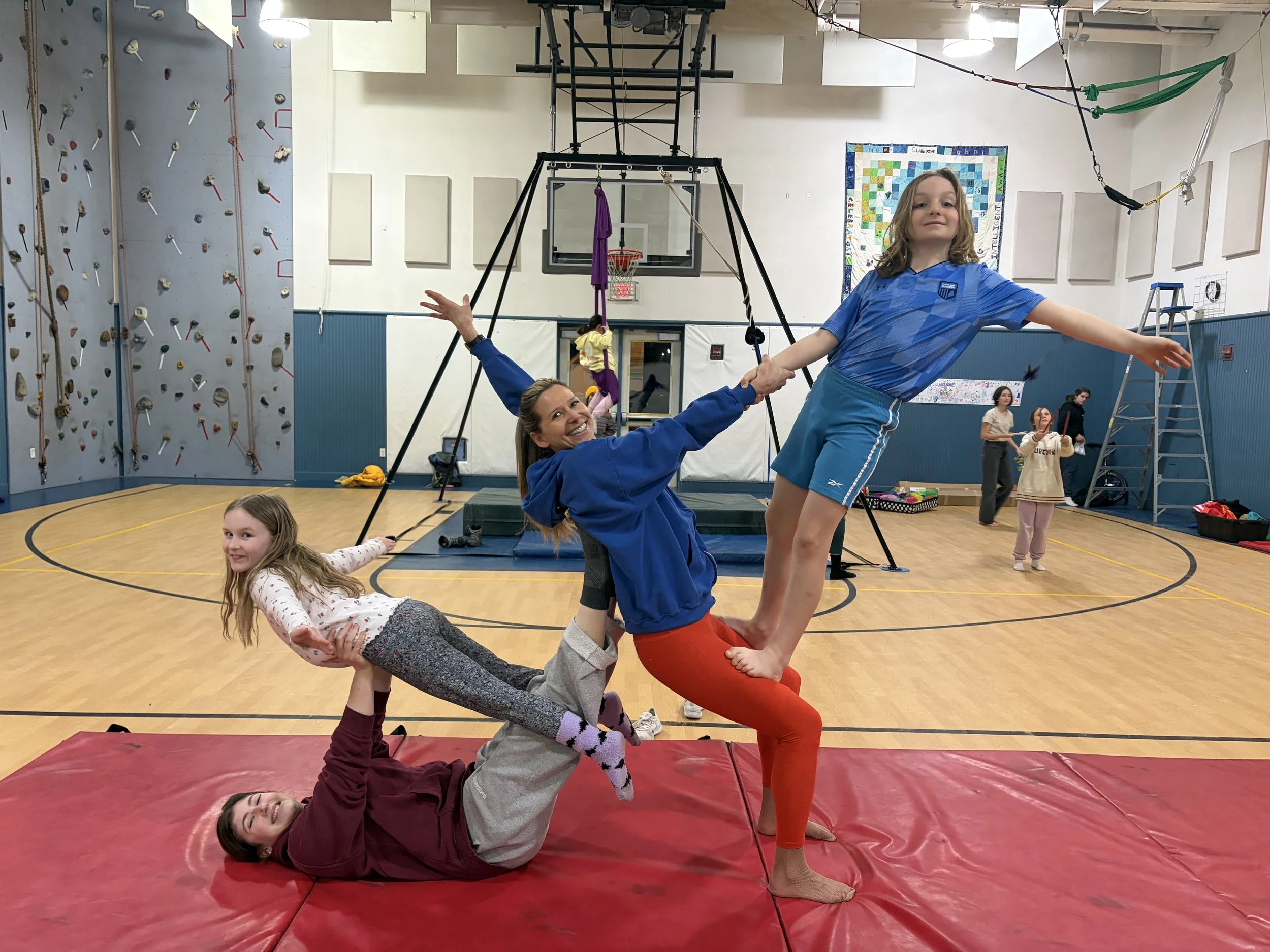
Circus activities encourage teamwork and communication. Here we see some Partner Acro!
Here is where the biggest benefits showed up:
Physical development
Many studies reported gains in balance, coordination, strength, and body awareness. It turns out that trying to walk on a wire or toss three objects into the air at once is pretty good for your muscles and your brain. Circus gives kids a reason to move in ways that feel fun instead of forced, and they can actually see and feel themselves improving.
Confidence and motivation
Several studies found that circus activities supported things like focus, persistence, and enjoyment of learning. One study described participants showing “intrinsic motivation, concentration, grit, positive affect, and positive youth development.” That is a long list of good things packed into one sentence. It also lines up with what happens in a circus class. A kid tries a trick, drops it a bunch of times, finally gets it, and suddenly thinks, “Oh. I can do hard things.” That confidence tends to travel with them into other parts of life.
Social and emotional skills
Circus is rarely a solo act, especially in youth programs. Many of the studies noted improvements in cooperation, communication, and emotional regulation. Partner balances, group games, and shared goals mean kids have to talk to each other, trust each other, and sometimes negotiate who gets the juggling balls first. Researchers saw growth in teamwork, empathy, and problem-solving, especially for youth who had previously struggled socially.
Well-being and happiness
A number of programs reported improvements in mood and overall emotional health. Some found fewer emotional symptoms and more positive feelings after participation.
Not every study measured things the same way, and not every result was dramatic. But the overall pattern is hard to ignore. Circus does more than teach tricks. It helps young people build physical skills, confidence, relationships, and emotional tools all at once.
What stood out most to me is how consistent the results were across different settings. Whether a program was in a school gym, a community center, or a therapeutic space, kids were benefiting in similar ways.
That tells me something important. Circus does not need the perfect room or the perfect student to work. It meets kids where they are, with whatever they are bringing that day. And then it gives them a chance to balance, juggle, laugh, fail safely, and try again.
Why This Matters to Me: Resilience Through Play
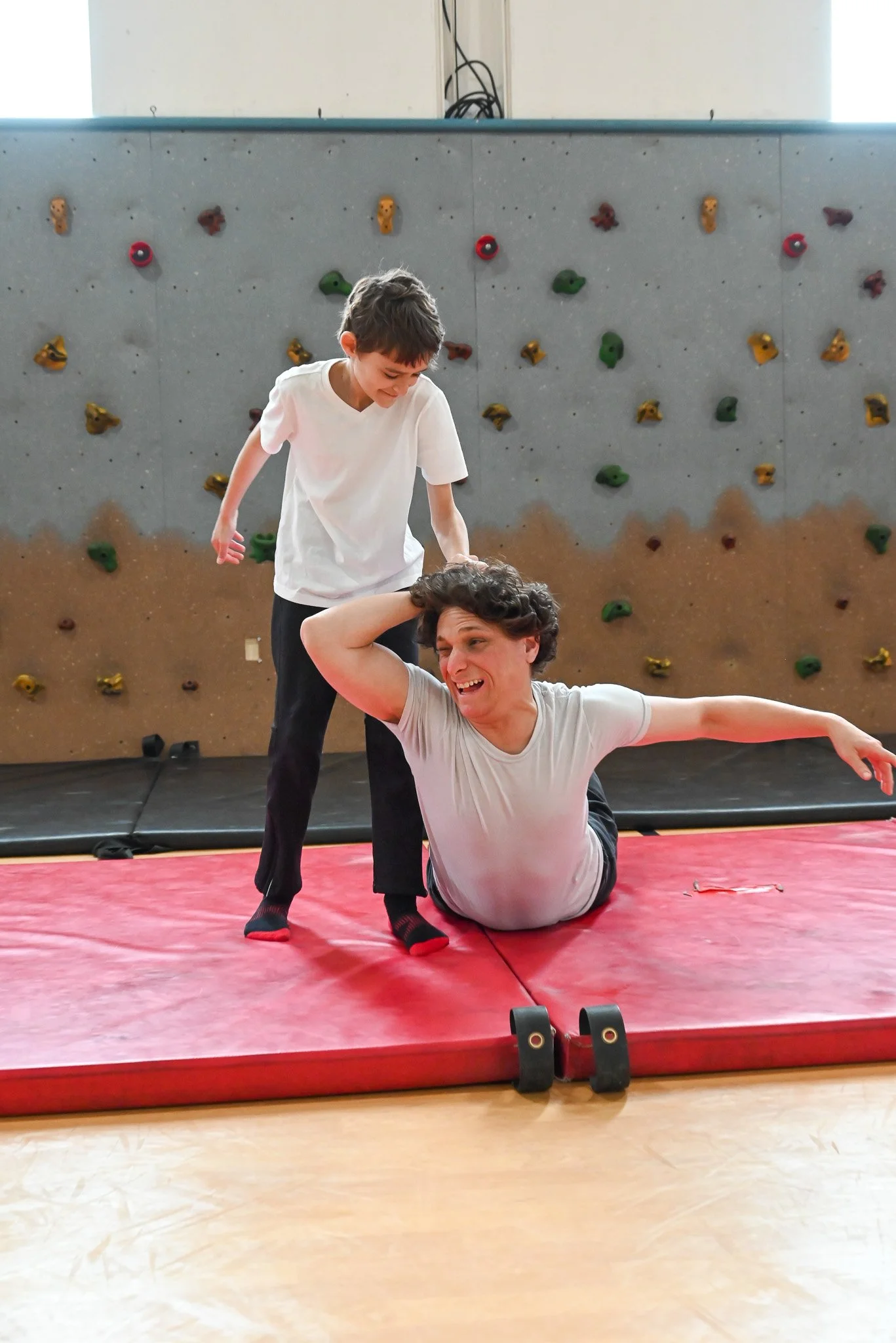
Learning circus skills builds trust and confidence.
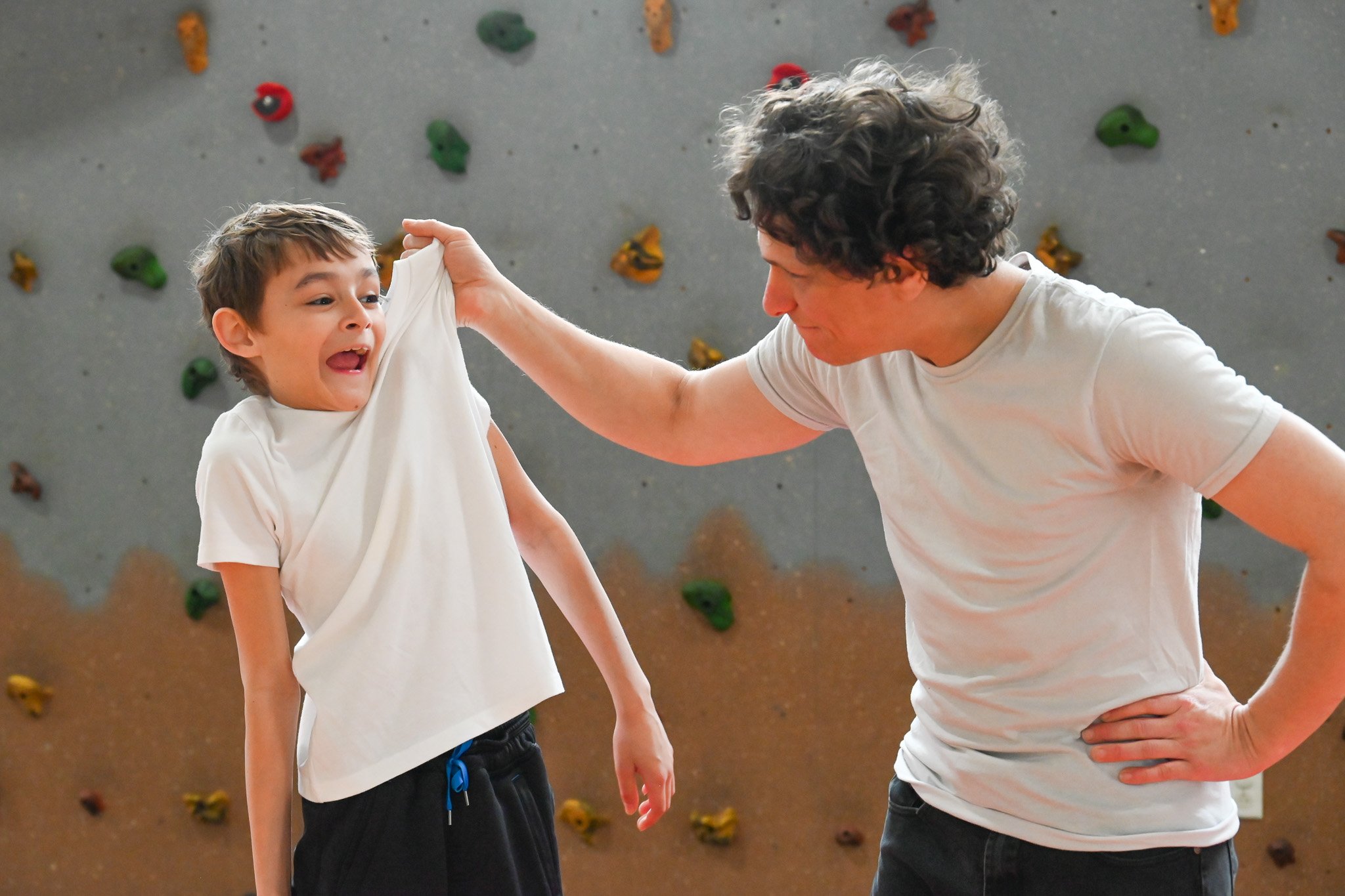
Here we are learning some slap stick
I believe every child deserves a chance to feel capable.
And the truth is that a lot of kids just don’t. I wish I only had one example of this, but the truth is that I see this kind of mentality in our youth all the time. If I had a nickle for any time I heard the phrase “I can’t do it”, “I’m not good enough”, “I always mess up”, etc. And that mentality follows these kids into adulthood. I believe it is essential to create spaces for kids where they feel empowered and confident.
Circus gives kids something real to work toward. A new trick is not just a goal. It is proof that effort leads somewhere. When a student finally gets a juggling pattern or holds a balance for the first time, their face changes. You can see the shift from “I can’t” to “I did.”
That moment matters.
It matters because it does not come from being told they are capable. It comes from feeling it in their own body.
Circus also teaches kids how to rely on each other. Partner skills require trust. Group games require cooperation. Even solo skills are learned in a room full of people trying together. Over time, that shared effort builds a sense of belonging. Kids begin to see themselves not just as individuals learning tricks, but as part of a group learning together.
Resilience is not just about pushing through hard things. It is about learning how to handle frustration, how to try again, and how to stay connected when things feel difficult.
In circus, failure is built into the process. Props drop. Balances wobble. Tricks take time. That makes circus a safe place to practice patience and persistence. Kids learn that mistakes are not something to hide from. They are part of how learning works.
And because circus feels like play, those lessons land gently. They are not framed as lectures or life skills. They come wrapped in movement, laughter, and creativity. A missed catch becomes a chance to try again. A shaky balance becomes a reason for a teammate to step in and help.
Over time, kids start carrying those lessons with them. They learn that they can struggle and still belong. They can fail and still be supported. They can feel frustrated and still keep going.
That is why this work matters to me. Circus is not just about teaching skills. It is about giving young people a place to practice resilience in a way that feels joyful instead of heavy, and playful instead of intimidating.
Looking Ahead
Circus belongs in schools, libraries, and community spaces. It belongs anywhere kids need room to move and room to grow.
If we want young people to build resilience, we have to give them chances to practice it. Circus offers those chances in a way that feels joyful instead of heavy.
That is why I keep showing up to teach. Not just for the tricks, but for the moments when a kid realizes they are stronger than they thought.
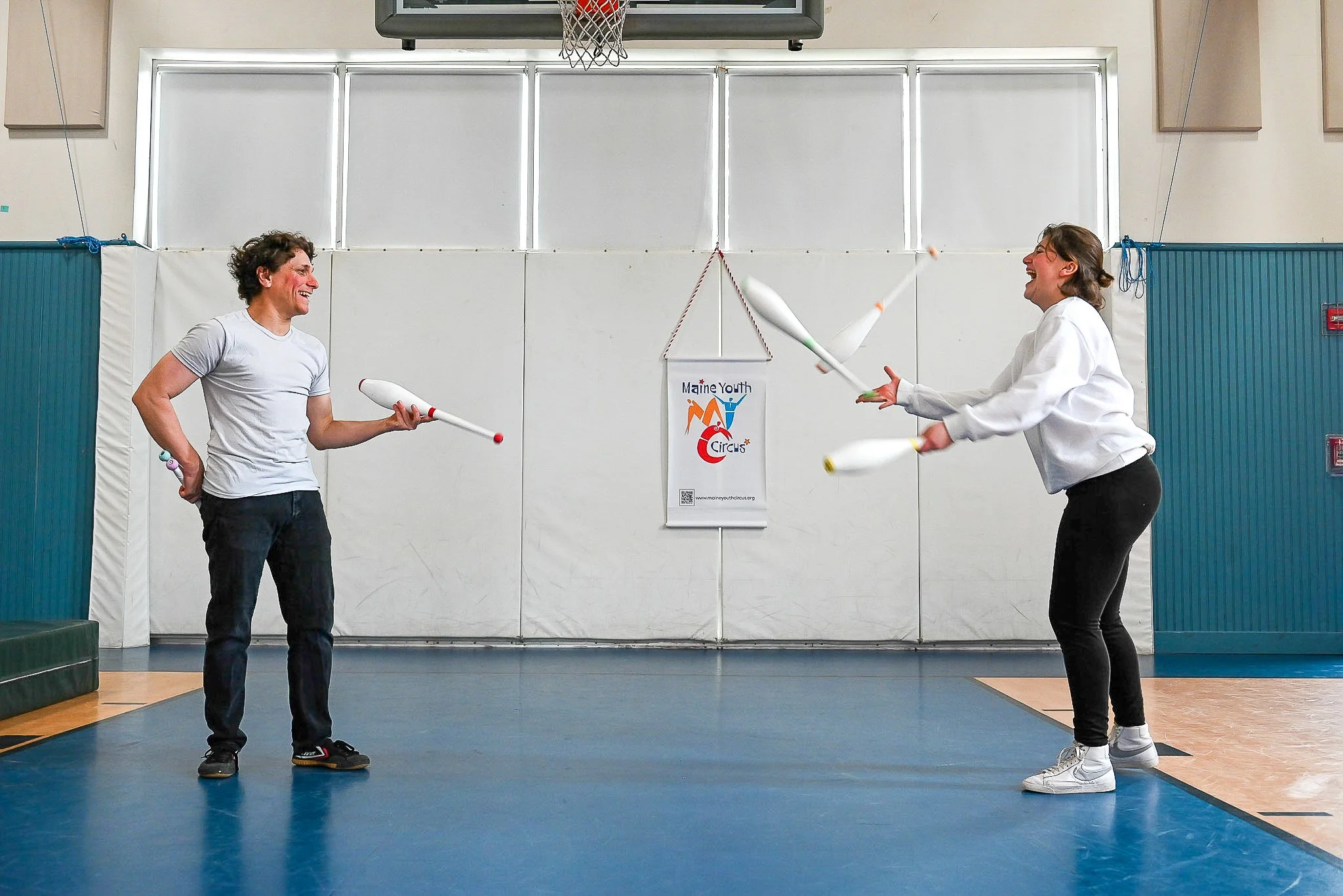
Play helps young people build emotional strength.