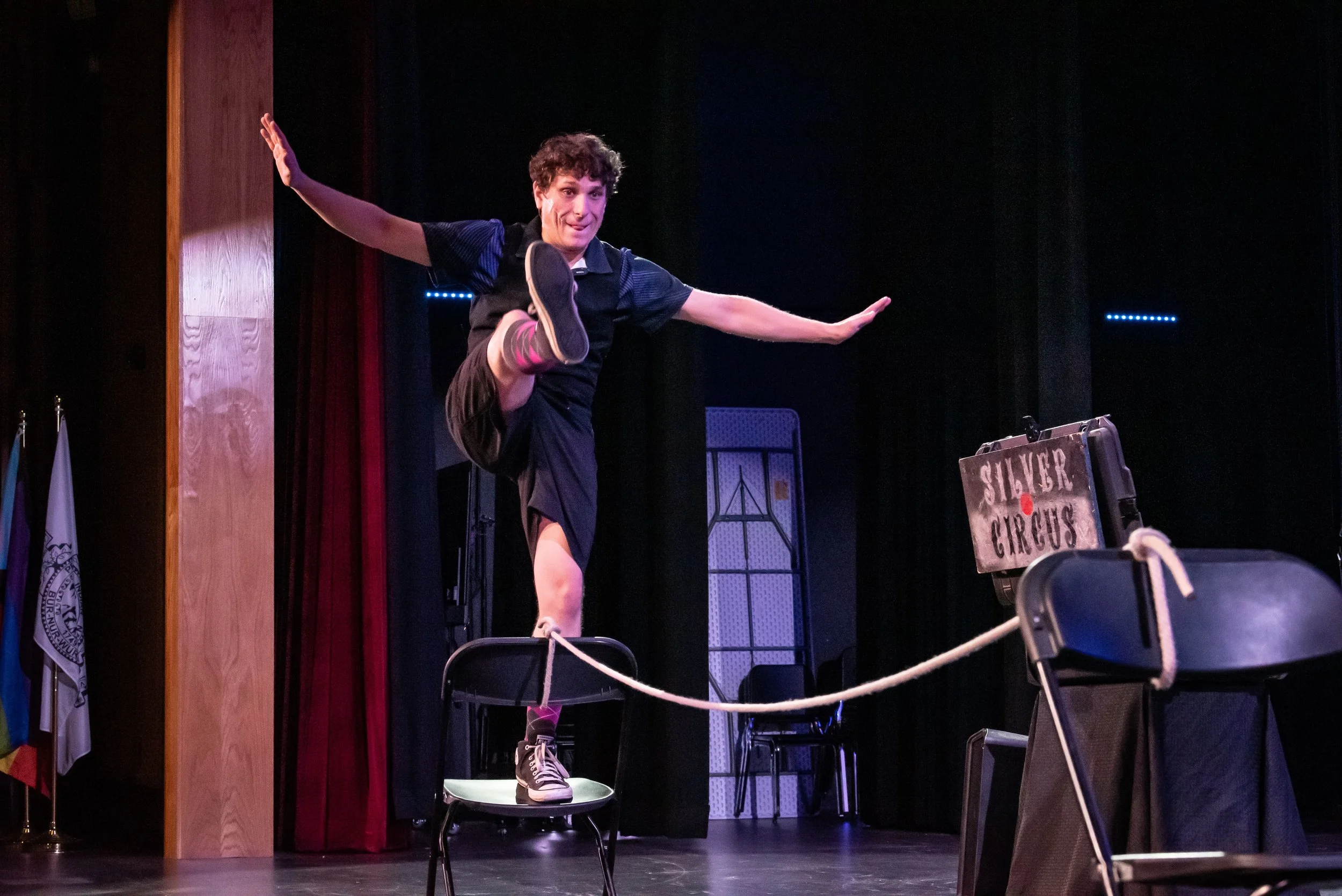
Fear, Failure, and the Fine Art of Falling
In the circus, falling isn’t a failure. It is part of the process.
Before a juggler can keep five objects in the air, they have to drop thousands of times. Before a tightrope walker can dance across a wire, they have to wobble, stumble, and step off more times than anyone watching would believe. Falling is the journey we make in pursuit of balance. It is often said that a master has failed more times than the novice has tried.
Thanks for reading The Silver Circus Blog! Subscribe for free to receive new posts and support my work.
As a clown, my whole job is to fail in spectacular and clever ways. People enjoy seeing a clown fail because it is relatable. It is ubiquitous and universal. On stage, you can’t hide a dropped ball, a missed catch, or a mistimed gag. The audience sees it — and that’s the beauty of it. The circus doesn’t pretend perfection. It celebrates effort, resilience, and the grace of getting back up.
We all collectively understand that seeing failure in a clown routine is wonderful, but we don’t extend that same understanding to ourselves and to the world. In the cultural zeitgeist, we are taught that failure is horrible. It is drilled into us at an early age that you need to get perfect grades, excel at extracurricular activities, and achieve greatness in your career. We are told that “failure is not an option”. But here’s the thing: failure is always an option. And sometimes it is the best option! It is the only way we grow and learn. It the only way we figure out how the world works. From the moment we are born we are failing. Failing to walk, failing to talk, failing to understand. But no one blames a baby for falling down when they try to walk for the first time. Why?
It’s because we understand that failing is a part of the process. We have patience for that child and know that they should keep trying, keep failing, and soon they will be able to walk. The thing we seem to forget, however, is that failure doesn’t stop at adolescence. We should never stop learning new things. And as we all know, the first step of being good at something is to be bad at something. Failure is required for growth. So, we should extend the same level of patience to ourselves as we did for that baby learning to walk.
Whenever I talk about failure in my workshops and performances, I am always reminded of a scene from the movie “Meet the Robinson”. It is a heartfelt Disney original about embracing failure and believing in yourself. If you haven’t seen it, I highly recommend you do. The scene features the main character building a small contraption in an attempt to resolve a conflict, failing completely, and getting praised for making the attempt. I would love to see a world where we embrace each other’s failures like this.
Every time we fall, we have a choice: to retreat in embarrassment or to lean in with curiosity. “What can this mistake teach me?” becomes a far more useful question than “Why can’t I get this right?”
In that sense, the clown routine becomes a mirror for life. The falls we take, the missed opportunities, the awkward missteps, the things that don’t go as planned, they’re all part of a larger routine. We can either fight them or learn to fall well. Falling well means accepting that we’re human, that growth is messy, and that sometimes progress looks like landing flat on your back, laughing, and trying again.
When you watch any circus performer recover after a mistake, there’s often an audible shift in the room. The audience exhales. They connect more deeply. They see the humanity behind the act. The performer, in that moment, teaches something greater than the trick itself, they teach courage.
The truth is, every great circus act is built on a foundation of small failures. A juggler’s rhythm, an acrobat’s timing, a clown’s comedic instinct, all of it comes from thousands of imperfect attempts. What we see on stage is the refined result of trial, error, and persistence. The art of falling isn’t about avoiding mistakes; it’s about transforming them into moments of magic.
So the next time you drop something, literally or figuratively, take a breath. Look at the ground, smile, and pick it back up. That’s where the real performance begins.
Every stumble is not a setback, it is a rehearsal for excellence.